Showing posts with label Louisiana. Show all posts

Thursday, November 13, 2025

A Day in the Life

I am linking up with Joyce for a special edition of "A Day in the Life."

The first week of November, I visited my sister, who lives outside the small town of Port Barre in South Central Louisiana.  Following her husband's sudden death in 2023, she built a barnamenium on her son, Eric's, property.  I want to share with you a Day in the Life of that visit, but first, let's go back a few days.

One evening before my trip, my husband and I were browsing Netflix for a nice movie to watch before bed. We came across A Christmas Contract and, after discovering it was set in Lafayette, Louisiana, decided it was the perfect choice. As it turned out, much of the film takes place in Acadian Village—a must-see attraction in this charming Cajun city.  That's when I knew Gin and I must include this during a day trip to Lafayette.

Now, back to my day.

Gin had a doctor appointment at noon in Lafayette on Tuesday, Nov. 4. Our day started early as I wanted to walk around the property before leaving.


Beautiful Cypress trees draped in Spanish Moss in front of Eric's house


The lot is perfect for walking, and Gin's home is situated in a corner surrounded by woods on two sides.  The large screened-in back porch is the ideal place to relax.

Following her appointment, we drove to Acadian Village. The Acadian people in Louisiana have a long, interesting history.  About 400 years ago, a small group of people left their homeland in France and sailed to Canada.  Here they settled and developed a new, distinct dialect known as "Acadian," like the people.  Because they refused to take a loyal oath to the English King and go against their Catholic religion, all the men were forced from their homes and arrested.  All that made up the Acadian colonies was then burned, and the people dispersed.

In 1764, one of he ships carrying these dispersed people landed in Louisiana, which was ruled at the time by Spain.  Over the next 300 years, about 3,000 Acadians found their way to Louisiana.  They were poor, illiterate, hard-working people, with a language, culture, and customs that set them apart.  In time, these people were absorbed into the population that came to be known as "Cajun".  Today, Cajun is a proud and celebrated heritage, rich in traditions and a unique way of life.  And these are the people around whom I grew up.


Sister, Gin at the entrance.


The Village is located on 32-acres. In the early 1970s, officials were looking for an opportunity to improve tourism in Lafayette, Louisiana while also honoring the heritage of the area.  Seven of the eleven buildings are authentic homes of the 19th century, donated by the families whose ancestors once occupied them. All homes show the passing of time and are remarkable examples of the ingenuity of the early Acadian home builders, complete with wooden pegs, mud walls, hand-hewn cypress timbers, and high-peaked roofs. Each was moved piece by piece and carefully restored.

Above is The Doctor's Museum.  It was at one time the office of the first resident dentist in Lafayette, built in 1890.

The grounds were being readied for their big Christmas events, and the movie shows what it will eventually look like.


This is the Aurelie Bernard House, which is the oldest structure in the village.  The section on the left was built around 1800, showing the stairs to the attic.  The exterior stairs are a major characteristic of the Acadian homes.  The remainder was built in 1840.  Inside is a large 1755 Canadian painting of The Exile of the Acadians from Nova Scotia.  It depicts the Acadian arrival and settling along the bayous of Louisiana from 1763-1785.


The Thibodeau (pronounced Tib-ee-doe) Museum is constructed from cypress, a very common tree along the bayous.  The house dates to circa 1820.  The boys slept in the attic or loft, (called the "garconniere"), which was only accessible through the exterior staircase and door seen above.


The Saint-Jean House on the left dates back to 1840 and was donated by a local dentist.  On the right is the LeBlanc House built about 1825 and is the birthplace of Acadian Statesman, spokesman, and politician, Dudley J. LeBlanc.  He is the author of "The True Story of the Acadians" and "The Acadian Miracle."  He is also the inventor of a very famous vitamin tonic by the name of Hadacol, 12% alcohol, and was guaranteed to cure all ailments.  This was a very popular tonic among the older folks when I was growing up.


New Hope Chapel is a replica of an 1850 chapel.  Today it serves as a wedding venue to many couples in and outside of Acadiana.


The Blacksmith Shop is also a replica of a blacksmith shop, built on site with weather-beaten, aged cypress boards.  It now holds the nativity scene that will soon make a more prominent appearance elsewhere.


Now, this picture may not be something some of you will recognize.  It was a common sight behind many old homes, especially in the South.  It is called the "Outhouse" because it was the bathroom-toilet. My grandmother had one, and my sister and I hated having to use it.


The barn is featured in several scenes in the movie and is in the process of being readied for the many festivities here during the holidays.


On the way back home, we made a couple stops in Opelousas and then ran the car through the car wash.  Gin made her delicious macaroni salad for supper (dinner in the south) and we spent the remainder of the evening relaxing in the recliners before hitting the sack. 

This was such a fun and interesting Day in the Life of Libby and Gingie.  I hope you enjoyed taking this day trip with us.


Below is the trailer for the movie mentioned above.  It is available for streaming on Amazon and may still be available on Netflix.



Monday, August 7, 2023

Bayou Chicot History Part 7


Why look back?  What is important about spending time on the history of a little village that barely exists anymore?

Because if its story isn't told and passed down, then future generations never know.  History can be so quickly and easily lost and when that happens, what brought each of us to whatever point we find ourselves, becomes insignificant.

We must never allow that to happen.  Even in telling the story of family, a tiny village and a church in Evangeline Parish, we find significance and meaning.  It is all part of our story.

Before we can appreciate the history of Bayou Chicot, located in the south-central part of Louisiana, we need to first remind ourselves of how Louisiana came to be.  It is one of the most fascinating stories of any state in the union and why Louisiana is probably the most culturally diverse state in the union.

The Spanish were the first to venture into the Mississippi River region.  An overland expedition in 1542 by Hernando de Soto, was the first European confirmation discovery of the mighty river; however, hostile climate, wildlife, and geography convinced Spain to look elsewhere for the precious metals and fertile soils they were seeking.

This whole area was ignored for nearly one and a half centuries until France's King Louis XIV, the "Sun King," began encouraging exploration of the Mississippi River in order to enlarge his own empire and stop Britain's and Spain's expansion.  In 1682, Rene-Robert Cavelier, Sieur de La Salle, reached the river's mouth and proclaimed possession of the river and all the lands drained by it for France.  He named this vast expanse "Louisiane," or "Louis' land."

In 1718 the city of New Orleans was founded by Jean-Baptiste Le Moyne, Sieur de Bienville on a narrow strip of land at the mouth of the Mississippi River.

France governed the territory until 1763 when it turned Louisiana over to Spain.  It was a Roman Catholic colony with a close relationship between church and state, priests, and politicians.  They were the prevailing order at the time and continued to be well into the 18th century.

Royal policy in France and Spain prohibited non-Catholics from living in the colonies, but especially in frontier regions like Louisiana.  This resulted in much persecution as Protestants began to arrive, and much opposition in being able to establish churches.

On December 20, 1803, in the Cabildo in New Orleans, Thomas Jefferson's designee, William Charles Cole Claiborne, highest-ranking civilian official in the vicinity and General James Wilkinson, signed the transfer document giving lower Louisiana officially to the United States.  Three months later the United States took possession of the full territory, in St. Louis when France handed over the rights to upper Louisiana.  That was the Louisiana Purchase.  On April 30, 1812, Louisiana was admitted as the 18th state.

History tells us that Native Americans populated much of the land; in fact, there were many different Indian tribes living in what became Louisiana.  We know that as early as 2000 BC, there were several groups living in both the north, central and southern sections of the state.  By 1700 there were at least seventeen Native American groups living in the Louisiana Territory.

Louisiana's Indian peoples are important to all of us because they represent the original human adaptation to the diversity of Louisiana cultures. As Houma tribal leader Helen Gindrat says, "We were people before we were called 'Indians." Despite years of neglect, exploitation, and expropriation of their lands, the Indians of Louisiana have persisted.  There are still four major Tribes plus eleven State recognized Tribes living in Louisiana.

In the 1700's most lived in small and large communities and were mainly farmers and hunters.  They were also very advanced in producing products needed to survive, such as their own clothing, jewelry, tanning, building, basket weaving, weapons, etc.

During this period, emigrating colonists, Indians and Africans were among the most numerous inhabitants.  They created a three-way exchange as no racial or ethnic group dominated, though Native Americans made up the largest segment of the population.  They shared food, medicines, material goods, and building and recreational practices among the groups, even though there were times the Indians waged war against these newcomers who were threatening their cultural existence and traditions.

Now, with that background, let's look more closely at Bayou Chicot. 

1905-2002

The interesting history about this area was captured in a book by Miss Mable Thompson, "Looking Back - A Narrative History of Bayou Chicot."  She was the acknowledged Chicot historian, and as the Chicot Social Editor for the Ville Platte Gazette, recorded and published every time I or my sisters "journeyed" to visit our parents in Chicot and anyone else who took a trip, or entertained guests.  She was my fifth grade teacher and one of the original teachers from the early 1900's.  It was because of her and my dad's influence that I learned to love history.

Her family are direct descendants from the earliest settlers, arriving in the early 1800's.   It is from her book, my own research, and our personal experiences, that I will share some fascinating facts and stories about Bayou Chicot, Louisiana, the oldest English settlement west of the Mississippi River.  To quote Miss Mable, "There was a Chicot before there was a United States."

Choctaw Indians

According to Miss Mable, earliest records show that there was a large tribe of Choctaw Indians living in the area later known as Bayou Chicot.  Her older brothers grew up with and knew many of them personally.  They even learned their language which did not consist of many words.  The Indians were friendly to these English speaking newcomers and there is no record anywhere of any discord between them.

Her oldest brother told her the story that he and a younger brother gave their Indian friends a dozen eggs one day to make them a blowgun. This was a gun made out of  a straight­ened, hollow piece of river cane used by the Indians for hunting small game such as squirrels and rabbits.  There was a dart made of some type of hard, pointed material which plugged up the end of the shaft.  When the hunter blew into the gun, the dart was forced through the shaft and out with a high velocity.  It is said these Indians could hit their prey with amazing accuracy.

This blowgun was still in Miss Mable's family home at the time she wrote the book.  What a treasure.  By the way, she lived in the original Thompson home until shortly before her death.

The Indians and settlers worked together, sharing knowledge and food as well as friendship.  After the war between the states most of the Indians became tenants of the white people but continued to live in the woods in camps or small villages.  Most of them were living in tents and wigwams, but as more settlers arrived, the Indians also began to build houses.  Unfortunately, many also became sick and died with the "white man's" diseases such as tuberculous and pneumonia. 

Miss Mable writes of having collected thousands of arrowheads of every size and shape.  This also explains why when our dad was plowing new garden rows, he would find arrowheads.  He would delight in showing them to us and telling us stories that he had heard as a child in North Louisiana.  The story had even been passed down that we had some Indian blood in our veins and that explained my olive complexion.  Although my DNA testing showed no trace, it still can not be ruled out.

Miss Mable tells an interesting account she learned from her brothers that you lady readers might enjoy.

"The squaws usually worked very well and were busy making baskets to sell out of switch cane. They would set up a camp in the woods and sit around a fire making baskets of all shapes and sizes. Whenever the squaws got tired of a man getting drunk they would grab him, and tie his big toes with buckskin strings and tie him as high as they could to a limb in a tree with only his shoulders touching the ground. He stayed in this position until he sobered up and begged to be taken down." 

She told about how the Indians who lived around them had a keen sense of humor.  Her uncle told her that before the Indians left for Oklahoma, they started getting a lot of mail from the government.  One day one of the men who was a frequent visitor to his front porch, was holding one of these letters and reading it.  The only problem was it was upside down.  When the uncle asked him about it, the old man said "You wouldn't understand it, it's all big Indian business."

Another of her stories that was told to her by her brothers and verified by others who personally knew the Indians, regards their method of justice.

"Old Charles was the last Tribal Chief the Indians had here, and when an Indian committed a crime, he was tried by Charles, and the tribal elders, and a sentence of death was pronounced. One Indian so condemned was away west of the Calcasieu River at the time so they sent word to him to appear so many moons from the date of sentence. When the appointed day came the Indian was stood against a tree. His squaw placed her hand over his heart, the bullet pierced her hand on its way to his heart." 

Early in 1900, the government declared that the Indians were to be rounded up and sent to Oklahoma where they could purchase land.  Of course, this is what is now known as "The Trail of Tears," one of the darkest days in American history.  Some of these Chicot Indians escaped and resettled in various parts of the state.  One group settled in an area west of Chicot, near the Texas border.  This land was known as "No Man's Land," and the people came to be called "Red Bones."  More on this in another post.

How Did The Early Settlers Come To Bayou Chicot?

It is believed that the early settlers who came in the early 1700's, were English speaking, but how did they know to come to this particular part of the south?

History tells us that George Washington somehow knew of the open prairies around what is now Opelousas, La.  It is located just north of Lafayette.  Records show that men from England and Scotland had been enticed by the promise of free land to come to this land to fight the French and the Indians.  These groups were causing a lot of trouble along the Ohio River.  At some point, a group of these men met with Washington, and he evidently told them that the promise could be kept if they were willing to go south to the prairies; hadvised them to go in groups for protection.  This is possibly how the open land around Opelousas came to be settled.  Is it possible Washington also knew of the beautiful forests, rivers, sandy rich soil, wild life and fowl just thirty miles north of these prairies?

It is possible some of the colonists foresaw the fight with England brewing and left to avoid it.  We know that some early settlers returned to fight in the revolution and no doubt told others about this lush available land.  I know that is how some of our ancestors learned of the available farm land in North Louisiana and left the Carolinas, moving their families across the wide Mississippi.

One of the most fascinating facts that I found is that there seems to be little doubt that the daughter of Louisiana's first Creole family and her husband were among the first, perhaps the very first non-English, to settle the Bayou Chicot area of the Old Opelousas Post.  For those of you not from Louisiana, Creoles were people of mixed colonial French, African American and Native American ancestry.  The Black Creoles were freed slaves who came from Haiti and settled mostly in New Orleans.

Marie des Neiges Juchereau de St. Denys/Sanchez-Navarro was the daughter of the founder of Natchitoches, Louisiana, Louis Juchereau de St. Denys, a French-Canadian explorer and soldier.  This area is still known for their Creole heritage and in fact, I knew several personally when we lived in Shreveport.  They are a proud people and rightly so, though at one point looked down upon because of their mixed heritage.  It is well known that St. Denys single-handedly guarded French interests in Louisiana prior to the founding of Natchitoches, the oldest settlement in the state.

In 1714, having blazed the Old Spanish Trail across Texas, while in Mexico, de Denys met, fell in love with, and married Emmanuela Sanchez-Navarro, who is said to be a descendant of Cortez, conqueror of all Mexico.  Their daughter, Marie des Neiges (which, in French, means "Our Lady of the Snows") was born at Natchitoches in 1734.  At the age of twenty, she was married to Emanuel Antonio de Soto Bermudez, a native of Galicia in Spain, and an officer of the Spanish king on the Texas frontier.

The story continues that as early as 1785, the king of Spain granted a tract of land at Bayou Chicot to the couple.  According to National Archives, as late as 1816, the children of this marriage still claimed property there.

Other land records indicate that this family also pioneered the first settlement at Pine Prairie or "Prairie Piniere" as it was first called.  It was at Pine Prairie where de Soto died in 1799, his wife Marie, having died two years earlier, either at Bayou Chicot or in Pine Prairie.  Their descendants are numerous in these areas to this day, represented by all Ortego families in the area of Evangeline Parish and beyond, some branches of the Fontenot and Vidrine familys, and many others.  These are common names and some of our closest friends in Pine Prairie were in this group.

No one knows exactly how Bayou Chicot got its name.  Chicot is French for "Stump" but since it was the earliest English settlement, that interpretation is unlikely.  It could have been a Choctaw word, but we will never know for sure.  Regardless, "Stump" has been the name of the school's yearbook since the beginning, and is the accepted interpretation.


Next time I will share with you more fascinating history of this part of the state.


Wednesday, March 22, 2017

A Spontaneous Road Trip

Do you like to do things spontaneously?

A couple nights ago we and friends went out to dinner then came back to our house for desert.  As we were sitting out on the patio enjoying the wonderful early spring evening something was mentioned about Dogwood trees.  Our friend told us about a Dogwood Trail he had been to in a nearby area several years ago.  That was all it took to decide we needed to take an afternoon trip the next day.

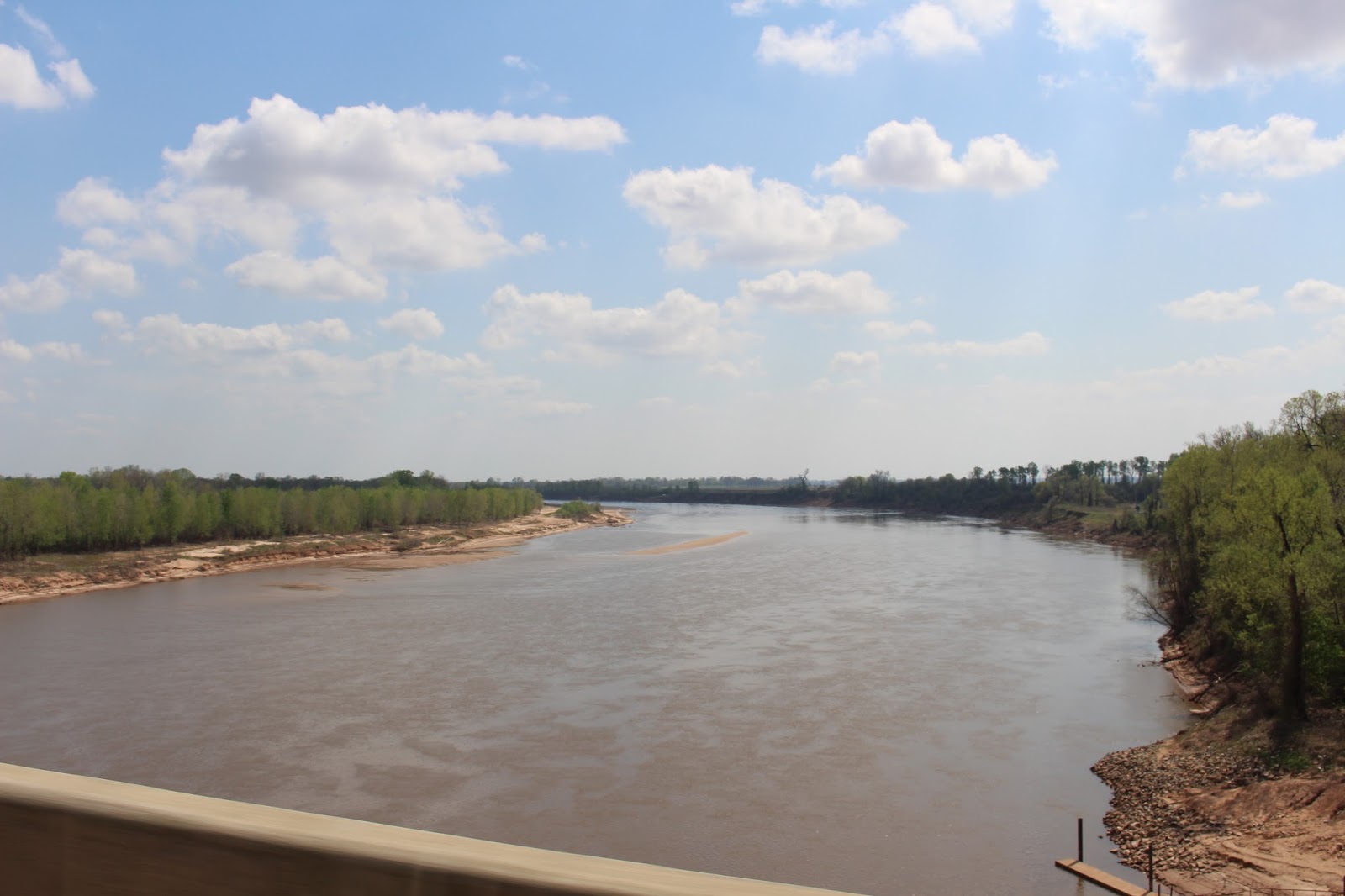
It was an absolutely gorgeous day to go deep into rural Northwest Louisiana.  The Red River was as lazy a flowing river as one would expect on such a day.
On the way to where we thought we wanted to be was a small, seemingly neglected village, known as Gilliam.
In 2010, the population was 164 with a median income for a household in the village of about $30,000 and the whole village covers about 2 miles.

 Mr. "Bob" Gilliam donated property for the right-of-way for the railroad route from Texarkana, Tx. south to Shreveport, La, with the understanding that the railroad would establish a depot on the banks of the Red Bayou and name it Gilliam.  They did this in the late 1890's.  This railroad line continued to operate until the 1960's.

Cotton was the main-stay of the economy of this area, but also the discovery of oil in 1904 added to the prosperity and development of this little town.  There evidently were several thriving business at the time.

In 1908 the Red River levee broke flooding the entire area including the town of Gilliam, killing 40 people and sending another 140 to area hospitals.
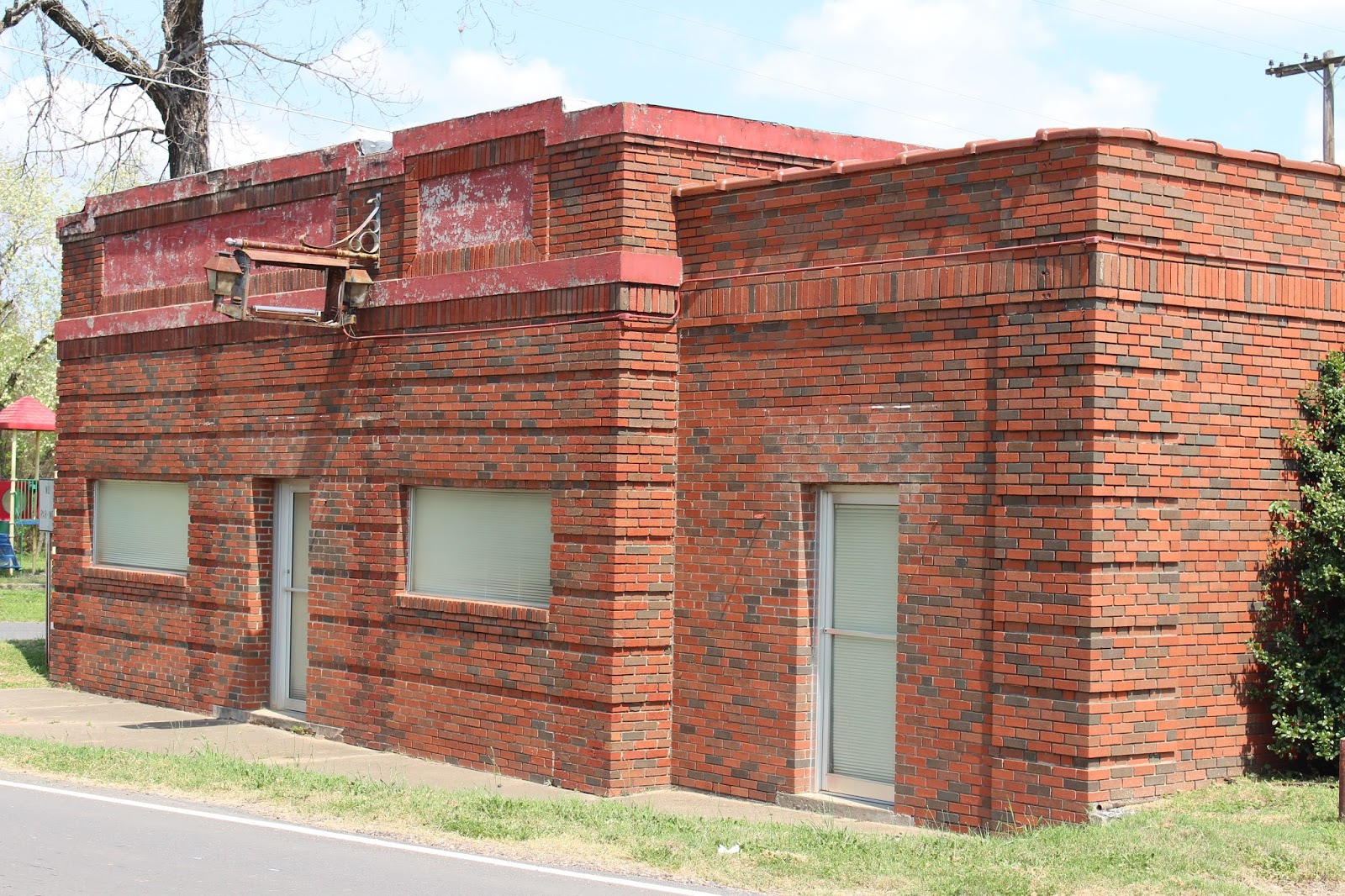
Following the flood, many of the land owners returned and rebuilt the village and brought in craftsmen necessary to maintain the cotton growing industry.  One of those buildings was built by Will Adger, Sr in 1916.  The building still remains as do several of the others from that period.
 I was curious to see inside this place called Adgers Grocery.
Will Adger Jr. who joined his father in the store in 1939, died in 1989 leaving the store under new ownership.  The shelves were packed with odds and ends that people in a rural town might need.
 For all practical purposes, it is now what the owner called a "man cave."  He has opened a restaurant/bar with the emphasis on bar, in the rear of the store.
He was even  happy to show off his kitchen to us and our friends who own one of the top notch catering businesses in Shreveport found it interesting, to say the least.
Getting to see the old triple layered original brick walls and hear its fascinating history made this a fun stop.
Across the street is the only remaining old cotton gin that helped established this area.
Since cotton is no longer "King" in this area, soybeans and corn have been added to the many large farms.  One of the major drawing cards to this area are the amazing sunflower fields and the annual Sunflower Festival in Gilliam.  I blogged about our trip to see these amazing flowers a few years back that can be found HERE.
This old relic plow could sadly depict what remains of the village of Gilliam; however, the friendly people and their optimism does not reflect this attitude.  That's because small town America still lives in the hearts and lives of the people.

We did find a neat little place to eat and it was worth the chance we took on it.  Sometimes the best food can be found in these little rural places where women grew up knowing how to cook for the men folk and big families.
 This building was built in the early 1900's like all the others and was once a grocery store and then a restaurant all these years.  We were told it has a thriving clientele now under new ownership.
The special of the day caught my eye and it was delicious and large enough serving I was able to bring some home.  Who can beat that for less than $10.00.
 We agreed that will be worth the 45 minute drive to return to Main Street Restaurant for another meal.

With full tummies, we continued our trek to find some dogwoods.

Actually, we were disappointed that we didn't find more, but the drive and little side road excursions were so much fun, we didn't mind at all.

I did take a few treks into the woods to find some pretty trees that I will share.
 This was one of the tallest Dogwood trees I have ever seen.  It was stretching for the sun.
On one of our little dirt road excursions, we found this beautiful rolling hill view.
 We also came across this calm little lake.

 If you look closely to the left in the above picture, you will see remaining evidence of last year's flooding in this area.
 We are so glad we decided to do something spontaneous.  You never know what might await you in this wonderful world God created.  I highly recommend it.

Sunday, January 15, 2017

My Return Visit to Poste des Opelousas

Back in April of last year, I promised to make a return trip to the little village of Washington, Louisiana, the 3rd oldest settlement in Louisiana.  It is said that now 80% of the village is on the National Historic Registry.
The following information came from this link (pictures are mine): Washington, Louisiana 

Founded in 1720 and incorporated in 1835, the community was first established as Poste des Opelousas, a French trading post. Early records indicate that the community was later called Church Landing because the settlement included the first church in the Opelousas district, La Iglesia Paroquial de la Immaculada Conception del Puesto de Opelousas, built in 1774.
 
Of course the original church building is long gone, but when the replacement was burned to the ground a few years ago, the new church was designed to replicate the original as close as possible.  It is a beautiful little Catholic church occupying a full village block.
In the 1800′s, Washington was an important steamboat port with cotton, cattle, sugar, and molasses being the major products shipped from the region. It became the largest steamboat port between New Orleans and St. Louis, Missouri. Bayou Courtableau is the western border of the village and now only a small, muddy tributary that eventually feeds into larger bayous and lakes further southwest.
Seen from across the bayou, the building on the right above is now said to be owned by a "couple movie stars" and was once a hotel.
 It does not appear that the "movie stars" are doing much with this historic building today.
 
With the arrival of the railroad in 1883, Washington’s importance as a center of commerce declined. The last steamboat departed in 1900, leaving the town with a wealth of antebellum plantation homes and Victorian houses that have today formed the basis for a significant and growing tourism industry.
Along side this beautifully maintained Plantation home, is what I think must have been at one time a "paved" path for wagon wheels.
The town of Washington is to Louisiana what Williamsburg is to Virginia.  Unlike Williamsburg, however, with its many reconstructed replicas, the historic homes and businesses of Washington are graceful, original buildings from Louisiana’s nineteenth century past.
  For example, the old Steamboat Warehouse Restaurant located on Bayou Courtableau just upstream from the steamboat turnaround, is a fascinating reminder of the bustling steamboat era which drew to a close only after the coming of the railroad in the late 1800′s.
  This is now the Steamboat Warehouse Restaurant.
 
Washington contains many examples of various Architecture, ranging from board and batten cottages to towering plantation houses with full galleries.
Front and back of a stately old house.
 Characteristic of the old Louisiana Plantation homes is the detached kitchen.  It was here the slaves would have cooked for safety purposes.  This house is a perfect example of what it looked like.  I'm sure this long-ago cooking place is now used for a more practical purpose.
This lovely old home on the bayou embankment, can also be seen in a picture above from across the bayou.
Washington has many wonderful old live oaks, many of which are recorded in the register of the Louisiana Live Oak Society.  They are definitely one of my favorite things about this historic place.

This is the only house of this particular style in the village.  It is more of a New Orleans architecture than the other homes.  Notice the rear open balcony and ornate iron smaller balcony on front.
 Another feature found on many of the homes here is the outdoor staircase.  Originally, the staircase would have led to the attic area.  Today, many of them are just simply there.

The brick commercial buildings on Main Street are also of major interest, since a number of them still maintain their 19th century ornamental store fronts.
 The old high school is now an amazing antique mall.
I found the old cemetery to be very interesting.  Many tombstones dated back to the Civil War.
Also, found in the cemetery are some ancient cypress trees.  The gnarls and bark patterns are unlike any other tree.
Speaking of the old oaks, I was photographing a tree when I noticed a white ball on one of the tree trunks.  I switched to my zoom lens to see what it was.  Imagine my surprise when I found this beauty.
Once the site of Plonsky’s Opera House, the Museum contains memorabilia from Washington Steamboat Days and also houses many interesting artifacts of Washington’s past and maps of the area.
 So, when traveling down I-49 in central Louisiana you just might want to look for the exit to Washington and explore this historic little village as I did. 

Linking to